

PORCHES & PATIOS: design inspiration for outdoor living


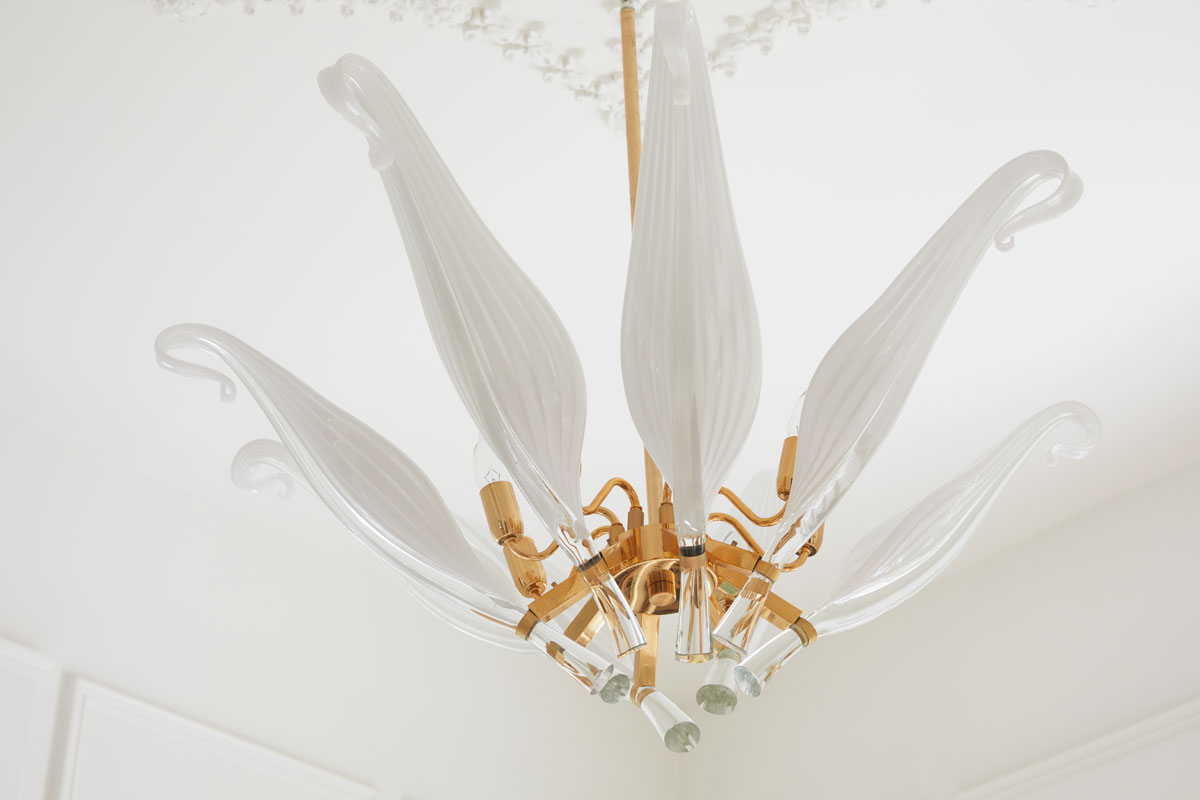
Outdoor weather is officially upon us here in the northeast United States and I thought I would help bring in the season with a little ode to the old American pastime of lounging on porch swings, drinking ice tea, catching up with neighbors and just kicking back and taking it a little easy for a moment as the lazy days of summer roll in. Enjoy! Shown above – a veranda added on to a historic Hudson Valley Estate boasts an Egyptian chandelier, a dining table by Tucker Robins, and aluminum chairs by Knoll. Designed by Architect Alison Spear, photo by Joshua McHugh, featured in Architectural Digest.


Porch perfection = a gorgeous swing built by D & A Studio, a charred iron lantern from Farrey’s, and a red Adirondack Chair from DWR. Featured in Luxe magazine, summer 2012.


This tiny porch features an antique French daybed upholstered in white denim, with outdoor curtains and a woven side table by West Elm. Designed by Lloyd Ralphs Design. Featured in House & Home, April 2007.


Designed by architect Bill Ryall, this sunny Long Island porch is screened in with simple wood framing and features a 1950s butterfly chair, a plywood-top table with industrial folding legs, a simple white fabric runner and folding wood chairs. Photo by John M. Hall. Featured in Elle Decor.


A deep built in bench, topped with plump cushions, allows for comfortable seating or napping. Photo by Jean-Philippe Piter. Featured in Coastal Living.


Welcome to the outdoor lounge of designer Monica Penaguião in Palmela, Portugal (You didn’t think I would be able to confine the design goodness to just the U.S. did you?). The built in ledges serve as a resting place for mattresses and cushions made from Turkish fabrics, an antique kilim rug defines the floor area and additional seating is provided by Tolix stools and chairs. Photo via Nuevo Estilo.


Designed by Marià Castelló and Daniel Redolat, this clean lined outdoor area provides ample seating for guests and is just plain gorgeous set against the rustic walls and woven overhang. Location – the Spanish island of Formentera.  Photo by Estudi Es Pujol de s’Era.


Back in the states – this charming porch was part of Southern Living’s Idea House 2012. The swing is by The Original Charleston Bed Swing, the fabrics are from Sunbrella, the Chevron Stripe rug is from Ballard Designs, and the Garden Seats are from Ballard Designs.


These graphic cushions, found on an Ibiza shopping trip, give big style to a small porch in photographer Mario Testino’s 1930s Spanish style Hollywood Hills home. Photos by Mario Testino for Vogue, March 2012.


And we close on a quiet note, on the front porch of interior designer, Jessica Helgerson. The red metal chair is by Fermob and available through French Bistro Furniture.comLocation - Sauvie Island, Oregon. Photo by Lincoln Barbour.


ERWIN OLAF IN THE HOUSE: 3 designers set his photos at home


The Amsterdam, Netherlands based photographer Erwin Olaf is perhaps best known for his unconventional, immaculate style, that never fails to to deliver a dramatic visual and emotional punch. Working both in film and photography, in commercial work and the fine arts – “Olaf’s trademark is to address social issues, taboos and bourgeois conventions within the framework of a highly stylized and cunning mode of imagery.” The result is a collection of work that seems to portray a hyper amplified, if at times unsettling, version of our recent and current history. Shown above – one of Olaf’s Hope Portraits, 2005 on display in The Novogratz’s home.


Royal Blood, 2000 by Erwin Olaf, in a Paris apartment designed by Pierre Yovanovitch.


With Olaf’s latest photography series, Berlin (2012), making a rather huge appearance at this year’s Milan Design Week, I thought it high time D pay Olaf and his work a little tribute. And what better way to do so, than to show how some of our favorite interior designers incorporate Olaf’s photography into their homes? How stunning is that first photo of the young woman? Above - People of the Labyrinths by Erwin Olaf in a bedroom designed by Remi Meijers.

Quote via erwinolaf.com. Photo # 1 by Emily Johnston Anderson.


IN A GALLERY NEAR YOU: fascinating look into a little seen world


It was early 2002 when Mike Brodie first heard of the time worn practice of train hopping – an American tradition of illegally jumping on and off freight trains to travel the country. Immediately enthralled by the idea, it was a matter of days before, at the tender age of 17, he jumped his first freight and a mere two weeks before he ‘was gone’ – disappearing into the vagabond lifestyle. In 2004 Brodie received a Polaroid camera, with which he began documenting his journey. He didn’t know it then but it would be four years, 7,000 pictures, 50,000 miles and 42 states before he would put down his then 35mm camera and hop from his last freight train.


In the meantime, he began posting his photos on various websites under the moniker “The Polaroid Kid”, offering the world an intimate glimpse into what was and is a gritty, sometimes frightening, sometimes beautiful, but always fascinating American subculture.


mike-brodie-dpages-blog-6
mike-brodie-dpages-blog-7


The final collection of photos – depicting filthy iron and steel trains rushing over gravel covered tracks, vast expanses of American countryside, fleeting personal moments, friends, relationships, places – have earned Brodie the prestigious Baum Award for American Emerging Artists (2008), two recent gallery shows (one in NYC and another running through May 11th in Los Angeles California), a hot off the presses book entitled A Period of Juvenile Prosperity, and a whole lot of recognition in the art and photography world. Success and accolades aside, Brodie says he never wanted to be an artist and has actually just completed two years of diesel mechanic school to enable him to work on the freight trains he grew to love so much. Mike Brodie’s photography may be purchased through the Yossi Milo Gallery in NYC and the M+B gallery in Los Angeles California.

Photos via Mike Brodie Photography and Yossi Milo Gallery.


GROW: a tiny greenhouse by Caroline Wetterling


I’ve had my eye on this little beauty by the Stockholm based designer Caroline Wetterling for ages and it has just become available for purchase through Design House Stockholm stores. The Grow mini greenhouse is intended to act as a nursery for your seedling’s first stages of life and/or as a home for nature’s most petite plants.


Made of handmade glass, the bottom serves to hold plant and soil, while the top portion, equipped with a small spout, does triple duty as a greenhouse roof, watering can, and ventilation system. Love it!

Ø 3″, H 5.5″ (Ø 8 cm, H 14 cm)


THE THERME VALS: Celebrating Peter Zumthor’s 70th birthday


Last week (April 26, 2013) renowned Swiss architect Peter Zumthor celebrated his 70th birthday. Winner of numerous prestigious awards, including the 2007 Pritzker Prize and most recently the 2013 RIBA Royal Gold Medal, Zumthor is regarded as one of the most influential and revered contemporary architects of our time. With a new five volume book, Peter Zumthor: Buildings and Projects 1986-2013, due out this September 2013, the architect’s star has never been brighter and his careful approach to his career – maintaining a small studio and only taking on a select few projects at a time – never more a model to emulate. For while in comparison to his peers, he may have produced fewer structures, what he has produced consistently falls into the ranks of the most stunning and acclaimed architecture around. Today, in celebration of our beloved Zumthor’s 70th year, D is visiting an old personal favorite from his portfolio, the Therme Vals in Switzerland.


Completed in 1996 and built over the only thermal springs in the Graubunden Canton region, The Therme Vals are situated on, and attached to, the site of a pre-existing 1970s hotel complex. Limited by his client’s request that he not build up, Zumthor approached the project as if it were a cave or quarry – as something that might have been there as long as the ancient thermal springs themselves. The result is a half buried structure built into the hillside – its grass covered roof serving as a visual continuation of the existing hotel’s yard.


Furthering the concept of a structure that is one with the land, Zumthor envisioned monolithic walls which he achieved by layering locally quarried Valser Quarzite slabs in thin panels measuring 31, 47, and 63 mm high. This specific formula of ‘stratification’ was carried though the whole of the baths, without exception, to stunning visual effect.


Nestled among stone walls and 15 massive supporting rectangular columns lie a series of indoor and outdoor pools just waiting to be explored. That said, it would be a mistake to think that a visitor’s experience of the Vals is not carefully choreographed with Zumthor wielding his materials of stone and air, water and steam, light and shade to masterful effect. It is said that at each turn the space allows then denies, reveals then hides – creating what must be a sensory filled mix of anticipation, surprise, and delight.


When asked to describe his highly lauded creation Zumthor replied, “Mountain, stone, water – building in stone, building with stone, building into the mountain, building out of the mountain, being in the mountain – how can all the associations and all the sensuousness which these words evoke be translated into a building, that is to say, interpreted in architectural terms? As we worked on the design of this building and saw it take shape, we gradually found answers to these questions.” – Peter Zumthor

Photos: 1, 2, 3, 10, 11, 13 via DimScale, 4, 5, 15, 16 via Graubuenden, 6, 7, 17 via ArchDaily, 8, 9 via Velux Stiftung, 12, 14 via Hotels Design


TEASER FROM DOWN UNDER: a must see Australian home


If you haven’t heard of them already, The Design Files is an award winning Australian blog headed by the talented Lucy Feagins. Each day she and her team cover everything from architecture to interior design to art – all the while maintaining a strong focus on Australian talents (like our friend Christopher Boots!). This past Tuesday, Lucy debuted an especially fabulous Melbourne home belonging to artist Anna Charlesworth, her real estate agent husband Peter Stephens, and their 12 year old daughter Nina. Ever since, I’ve been itching to share it with you and today is the day for your little sneak peek!


If you like what you see here, trust you will want to skip on over the Lucy’s place to view the full home tour, learn all the details, and after that, give The Design Files a good peruse.

Photography by Brooke Holm, production by Lucy Feagins / via The Design Files.